- Grapestained
- Posts
- Organic, Biodynamic, Natural Wine: Farming, Philosophy, and Flavor
Organic, Biodynamic, Natural Wine: Farming, Philosophy, and Flavor
From vineyard practices to winemaking philosophy, learn what sets these styles apart

Organic, Biodynamic, Natural
What Do These Words Actually Mean..?
Walk into any wine shop and you will see the words organic, biodynamic, natural, and sustainable. They sound healthy, responsible, and modern. But more importantly, what is the difference?
When we talk about these terms, we are really talking about two things:
How the grapes are farmed
How the wine is made
Some terms refer to farming.
Some refer to winemaking.
Some refer to both.

Sustainable
Think of sustainable as thoughtful farming.
There is no single legal definition. It is a philosophy rather than a strict certification. Growers who farm sustainably aim to reduce environmental impact while maintaining long term vineyard health.
Synthetic chemicals are not banned, but they are used carefully and only when necessary. Instead of spraying on a fixed schedule, growers monitor weather patterns and pest cycles to intervene only when needed.
A major component is biodiversity. Instead of rows made up of nothing but grapevines, sustainable vineyards often include cover crops, wild plants, and beneficial insects. This helps control pests naturally, improve soil health, and support the ecosystem.
In simple terms: Sustainable means using modern tools responsibly while protecting the future of the land.

Organic
Organic farming takes things a step further.
Synthetic fertilizers, herbicides, pesticides, and fungicides are not allowed. Instead, growers rely on natural alternatives such as copper, sulfur, compost, and plant based treatments.
To label grapes or wine as organic, certification from an official body is required. The vineyard must go through a conversion period before it can be certified and display that claim on the label
Regulations vary differently by country. In many countries, “organic wine” and “wine made from organic grapes” are not the same thing. In the United States, for example, organic wine cannot have added sulfites. Sulfites are natural compounds that help preserve wine and prevent spoilage. Many producers who farm organically still add small amounts of sulfites for stability. In the US, those wines are labeled “made with organic grapes” rather than “organic wine.”
We could dive deeper into sulfite regulations around the world, but that is a conversation for another day.
For today, organic refers primarily to how the grapes are grown, and certification matters.
Biodynamic
Biodynamic farming includes all organic practices but adds a philosophical layer.
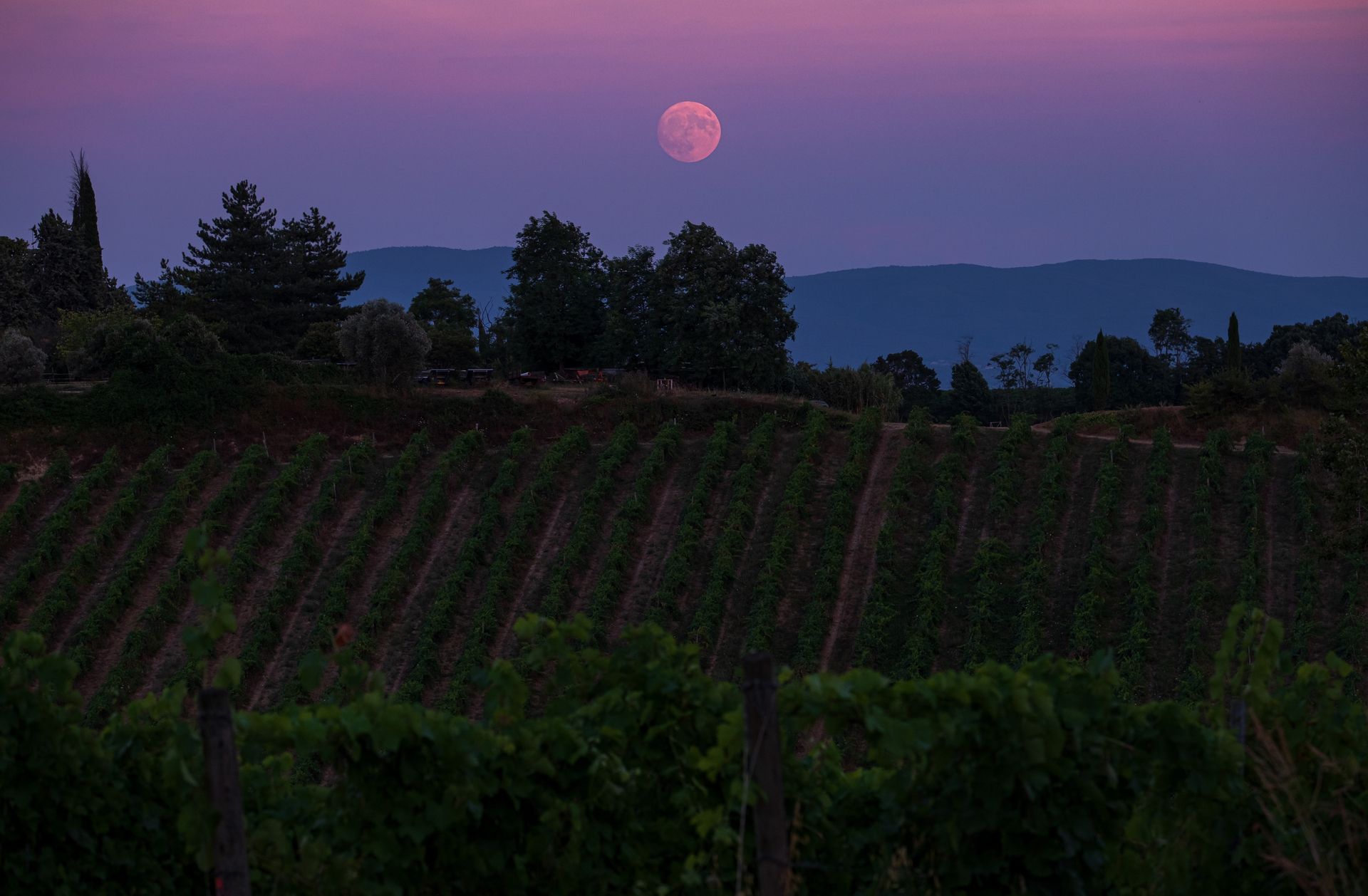
Based on the teachings of Rudolf Steiner in the 1920s, biodynamics treats the vineyard as a living organism. The farm is seen as a self-contained ecosystem where soil, plants, animals, and people are interconnected.
Biodynamic growers:
• Use compost made on the farm
• Encourage natural soil regeneration
• Promote biodiversity and balance
• Follow lunar and planetary cycles for activities such as pruning and harvesting
• Use specific natural preparations to strengthen soil and vine health
There are official biodynamic certifications, such as Demeter. At its core, biodynamic winemaking aims to create harmony between the earth, the vine, and the natural world.
Whether you see it as science, philosophy, or both, it is a holistic approach that goes beyond organic rules.

Natural Wine
Natural wine is different.
There is no official legal definition. No universal certification. It is more of a movement and a philosophy.
Natural wine typically means:
• Grapes are farmed organically or biodynamically
• Fermentation happens with native yeasts
• No chemical additives
• Minimal or no added sulfites
• Often bottled unfiltered and unfined
The goal is minimal intervention. The winemaker steps back and allows the wine to express itself as purely as possible. Unlike organic or biodynamic, natural wine focuses more on what happens in the cellar rather than only in the vineyard.
Because there is no strict regulation, the term can vary in meaning from producer to producer.
The Main Differences
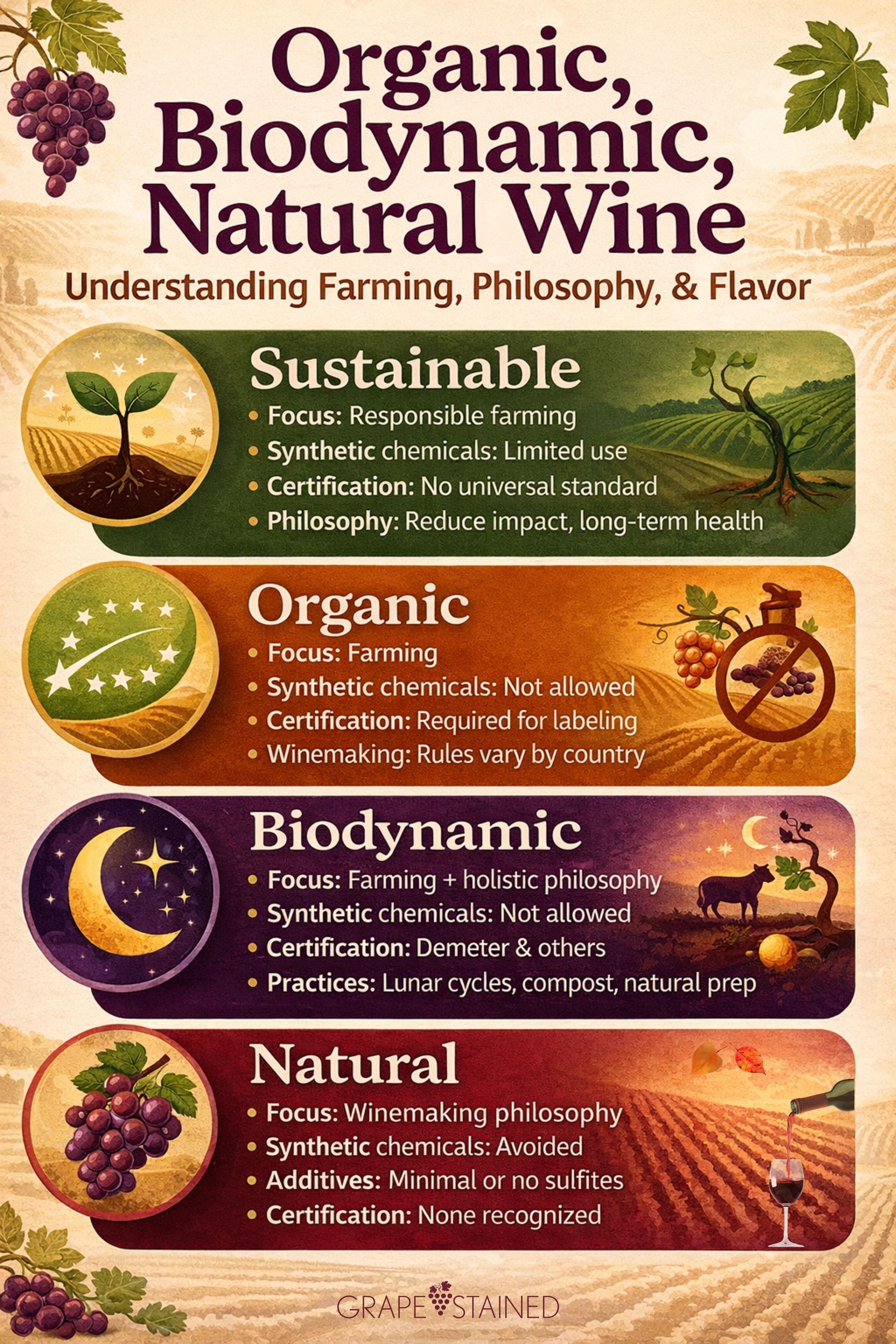
To recap, here is a simple comparison.
Sustainable
Focus: Responsible farming
Synthetic chemicals: Allowed in limited, controlled use
Certification: Usually no universal legal standard
Philosophy: Reduce impact, protect long term health
Organic
Focus: Farming
Synthetic chemicals: Not allowed
Certification: Required for official labeling
Winemaking rules: Vary by country
Biodynamic
Focus: Farming plus holistic philosophy
Synthetic chemicals: Not allowed
Certification: Yes, through specific organizations like Demeter
Additional practices: Lunar cycles, farm-based compost, natural preparations
Natural
Focus: Winemaking philosophy
Synthetic chemicals: Avoided
Certification: None universally recognized
Winemaking: Native yeast, minimal intervention, little or no added sulfites

What Should You Choose?
There is no right answer. These terms are not rankings. They are approaches.
Some growers farm sustainably and craft extraordinary wines.
Some organic bottles are bold and beautifully structured.
Some biodynamic wines feel alive in a way that is hard to explain.
Some natural wines are vibrant, raw, and full of personality.
In the end, what matters is honesty, story, intention, and whether you love what is in your glass.
So when someone starts explaining how their favorite wine aligns with lunar cycles, horoscopes, and planetary energy, you can laugh, sip, and actually understand what they are talking about for once.
Reply